Puppy Training 101: What Every First-Time Owner Needs to Know (UK Guide)
Everything you need to know about training your new puppy. From toilet training to basic commands — positive reinforcement techniques for UK owners.
By ReadyWag Team
Forget everything you've seen on TV. Modern puppy training is about communication, not domination.
The old-school approach — alpha rolls, leash jerks, 'showing who's boss' — has been thoroughly debunked by veterinary behaviourists. Dogs don't learn from fear or force. They learn from clear communication, consistency, and rewards.
Positive reinforcement training isn't just kinder — it's faster, more effective, and builds a stronger bond with your puppy. Here's everything you need to know to start training your puppy the right way, from day one in your UK home.
The Three Pillars of Puppy Training
Before you teach a single command, understand these three principles. Everything else builds on them:
1. Timing is everything. A reward must come within ONE SECOND of the desired behaviour — not after. If you're late, your puppy associates the reward with whatever they're doing in that moment, not what you wanted them to do.
2. Consistency is non-negotiable. If 'down' means lie down today, it must mean lie down tomorrow. If you let your puppy on the sofa sometimes but not others, you're teaching them that 'no' means 'maybe'. Decide your rules before you start training.
3. Set up for success. Don't wait for your puppy to fail so you can correct them. Manage the environment so they can't make mistakes — then reward them when they do the right thing. This is the secret to fast, frustration-free training.
Week 1: Start With These Three Things
In the first week, don't worry about 'sit', 'stay', or 'come'. Focus on the foundations:
- Name recognition: Say your puppy's name in a happy tone. The instant they look at you, mark it ('yes!' or a click) and treat. Do this 10–15 times a day in short bursts. By day 3, they should turn when they hear their name.
- Handling tolerance: Gently touch your puppy's paws, ears, mouth, and tail while giving treats. This prevents future battles with nail clipping, ear cleaning, and vet exams. Do this daily for the first month.
- Crate as a happy place: Feed meals in the crate. Toss treats in and let them explore. Never use the crate as punishment. The goal is a dog who voluntarily naps in their crate with the door open.
Toilet Training: The Step-by-Step System
Toilet training is the #1 challenge new owners face. Here's the system that works:
- Step 1: Take your puppy out on a fixed schedule — first thing in the morning, after every meal, after every nap, after every play session, and every 2 hours in between.
- Step 2: Go to the SAME SPOT every time. The smell triggers the behaviour.
- Step 3: Use a verbal cue ('go potty' or 'be quick') as they're going — not before. They need to associate the phrase with the act.
- Step 4: The instant they finish, mark ('yes!') and reward with a HIGH-VALUE treat. Not kibble — something special like cheese or chicken. This is the most important training you'll do, so make it worth their while.
- Step 5: If they have an accident, clean with enzymatic cleaner and move on. Never punish. Punishment teaches your puppy to hide from you when they need to toilet — the opposite of what you want.
The Essential Commands (and How to Teach Them)
Once your puppy knows their name and has basic toilet training underway, start on these commands. Use a treat pouch to keep rewards accessible at all times.
- Sit: Hold a treat at your puppy's nose, then lift it slowly up and back over their head. As their head tilts up, their bottom naturally drops. Mark and reward the instant they sit. Repeat 5–10 times per session, 2–3 sessions per day.
- Down: Start with your puppy in a sit. Lower a treat to the floor between their front paws. As they follow it down, slide it forward. Most puppies will lower themselves to follow. Mark and reward. If they stand up, you moved too fast.
- Stay: Start with sit. Open your palm like a stop sign, say 'stay', take one step back, then immediately return and reward. Gradually increase distance and duration. If your puppy breaks the stay, you've moved too fast — shorten the distance.
- Come: The most important command. Start indoors with no distractions. Say your puppy's name + 'come' in a joyful, excited voice. When they come, throw a party — high-value treats, praise, play. Never call your puppy to you for something unpleasant (nail trims, bath). If you do, 'come' becomes 'danger' and they'll stop responding.
- Leave it: Hold a treat in a closed fist. Let your puppy sniff, lick, paw — ignore them. The SECOND they pull their nose away, mark and reward with a different treat from your other hand. This teaches impulse control. Practice daily — it can save your puppy's life if they find something dangerous on a walk.
Training Gear: What You Actually Need
You don't need much — but what you do need makes a real difference:
- Treat pouch: Essential for keeping rewards accessible during training and walks. Wear it on your waist so both hands are free.
- High-value treats: Small, soft, smelly. Chopped chicken, cheese, or commercial training treats. Kibble won't cut it for important training.
- Clicker (optional): A clicker marks behaviour with perfect timing. Many trainers swear by them. Equally effective: a sharp 'yes!'.
- Lightweight lead: A 1.5m standard lead for early training. Extending leads are not recommended for training — they teach pulling.
- Y-front harness: Gives you control without restricting your puppy's natural movement or putting pressure on their neck.
- House line: A lightweight, short trailing line used indoors for gentle guidance. Helps you redirect without reaching or grabbing.
Common Training Mistakes (and How to Fix Them)
Mistake: Repeating commands. Saying 'sit, sit, SIT' teaches your puppy that the word means 'maybe eventually'. Say a command once. If they don't respond, you haven't set them up for success — go back a step.
Mistake: Using the same treat for everything. Save high-value rewards (cheese, chicken, liver) for toilet training and recall. Use kibble or medium-value treats for known commands. Your puppy needs to know when something is REALLY important.
Mistake: Training too long. Puppies have the attention span of a gnat. 2–3 minute sessions, 5 times a day, beats one 15-minute session where everyone gets frustrated.
Mistake: Punishing unwanted behaviour without redirecting. If your puppy chews the sofa, don't yell — hand them a chew toy instead. They learn 'this is what I CAN chew', not 'I'm bad'.
Socialisation: The Most Important Training You'll Do
Between 3–16 weeks, your puppy's brain is a sponge. Everything they experience during this window shapes the adult dog they'll become. Socialisation doesn't mean 'meet every dog and person'. It means positive, controlled exposure to the world.
Until vaccinations are complete (usually 12 weeks + 1–2 week wait), carry your puppy everywhere. Sit outside the train station. Watch children play from a distance. Walk past a construction site. Visit a friend's garden. The goal is neutral or positive reactions — not fear.
After vaccinations, enrol in a reputable UK puppy class. Look for force-free, positive reinforcement trainers. The Kennel Club's Good Citizen Dog Scheme is a solid starting point for finding qualified UK trainers.
Final Thoughts
Training isn't about creating a robot dog who performs on command. It's about building a language of communication between you and your puppy. Every session, every reward, every gentle redirect is a brick in the foundation of your relationship.
Be patient. Be consistent. Celebrate tiny victories. And when you're exhausted and your puppy is bouncing off the walls, remember: the adolescent phase ends, the training pays off, and one day you'll look back and realise you've built the best friendship of your life.
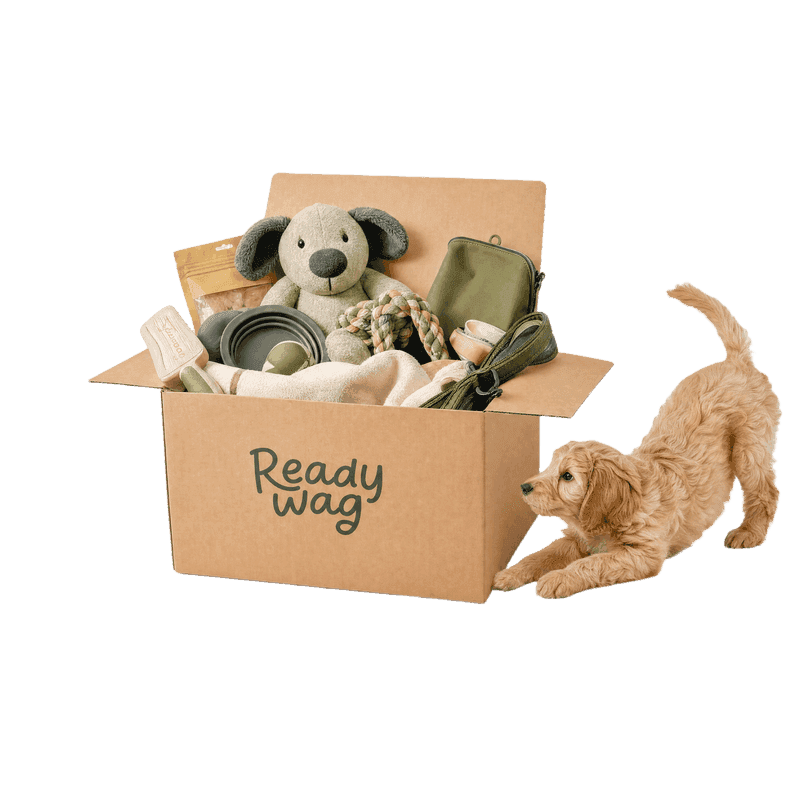
All the training gear you need, in one box.
The ReadyWag Complete Kit includes a treat pouch, harness, lead, and more — everything you need to start training from day one. Personalised for your puppy and delivered free across the UK.
Get the Complete Kit→