How to Puppy-Proof Your Home: A Room-by-Room Guide (UK 2026)
A practical, UK-focused guide to puppy-proofing every room in your home. From electrical cables to toxic plants, here's what to fix before your puppy arrives.
By ReadyWag Team
Before your puppy comes home, get down on your hands and knees and see your house from their height.
Puppies explore the world with their mouths. That phone cable at ankle height? Irresistible. Those trainers by the door? Chef's kiss. That houseplant on the low table? Looks like a snack.
Puppy-proofing isn't about turning your home into a sterile bubble — it's about removing genuine dangers and putting away things you don't want chewed. Here's a room-by-room guide for UK homes, covering the hazards most new owners miss.
General Principles (Read This First)
Before we go room by room, three universal rules:
1. If it's at puppy mouth height, it will be chewed. Move everything up or put it away. 2. If it smells interesting (shoes, remote controls, glasses), it will be chewed more. 3. Puppies can't tell the difference between a £5 toy and a £500 handbag. Prevention beats correction every time.
Now, the rooms.
Living Room
This is where most puppies will spend their awake hours — and where most accidents happen.
- Electrical cables: Secure loose cables behind furniture or use cable covers. Phone chargers are the #1 chewed item. Unplug and put them away when not in use.
- Remote controls: They smell like your hands. Place them on high surfaces, not the coffee table.
- Low furniture gaps: Block gaps behind sofas and under cabinets where puppies can get stuck or hide treasures.
- Houseplants: Many common UK houseplants are toxic — lilies, ivy, peace lilies, philodendrons, snake plants, aloe vera. Move them out of reach or re-home them.
- Rugs: If you value them, roll them up for the first few months. Accidents happen, and enzymatic cleaners can fade colours.
- Fireplace: Install a hearth gate or screen. Even unlit fires are dusty and dangerous.
Kitchen
The kitchen is full of enticing smells and genuine dangers.
- Bin: Get a puppy-proof bin or put it in a cupboard. Kitchen scraps can cause pancreatitis, and chicken bones are a choking hazard.
- Cleaning supplies: Move to high cupboards. Bleach, dishwasher tablets, and laundry pods are all toxic.
- Low cupboards: Use child safety locks. Puppies can open cupboard doors surprisingly early.
- Food on counters: A determined puppy can jump higher than you think. Never leave food unattended on low counters.
- Oven and fridge gaps: Block with cardboard or a pool noodle so nothing (and nobody) gets trapped.
Bedroom
Your bedroom is where your puppy may sleep (highly recommended for the first few weeks) — make it safe.
- Shoes: Put them in a closed wardrobe. Puppies love the smell of feet. One £100 trainer can vanish in 30 seconds.
- Socks and underwear: Keep off the floor. These are some of the most common swallowed objects in puppy A&E visits.
- Medication: Make sure pill bottles are in drawers or cabinets, not on nightstands.
- Jewellery and small objects: Earrings, hair ties, coins — all tempting and all dangerous if swallowed.
- Charging cables: Same as living room. Unplug at night if your puppy sleeps in your room.
Garden / Outdoor Space (UK-Specific)
Your garden is your puppy's first toilet and playground. Make sure it's secure.
- Fencing: Check for gaps under fences — puppies are escape artists. A 12-week-old can squeeze through surprisingly small holes. UK gardens with wooden fences need checking post-winter when panels shift.
- Toxic plants: Foxgloves, rhododendrons, yew, laburnum, hydrangeas, daffodils, bluebells — all common in UK gardens and all toxic to dogs. The UK's Poisonous Plants database is worth checking if you're unsure.
- Slug pellets and pesticides: Switch to pet-safe alternatives. Regular slug pellets are highly toxic to dogs.
- Ponds and water features: Cover or fence off until your puppy is older and can swim confidently.
- Sharp tools and garden chemicals: Lock in a shed. Puppies will investigate anything new.
- Compost bins: Seal securely. Rotting food is irresistible and dangerous.
Bathroom
The bathroom has more hazards than most owners realise.
- Toilet: Keep the lid down. Puppies have drowned in open toilets. It sounds unlikely, but it happens.
- Medication cabinet: Lock it. Paracetamol, ibuprofen, and antidepressants are all toxic to dogs.
- Toiletries: Move shampoos, lotions, and toothpaste out of reach. Many contain xylitol, which is highly toxic to dogs.
- Towels and bath mats: These will be chewed and dragged around. Buy cheap ones for the puppy phase.
Home Office
If you work from home, your office needs special attention — your puppy will be in here with you.
- Cable management: Desk areas are a nest of tempting cables. Use cable trays or clips to route everything out of sight.
- Paper and documents: Shredded paperwork is a classic puppy move. Keep important documents in drawers.
- Small office supplies: Staples, paperclips, erasers — all choking hazards. Keep in containers.
- Laptop charger: The #1 cable casualty. Buy a spare now, or route it where puppy can't reach.
The Puppy-Proofing Shopping List
Things to buy for a safer home:
- Baby gates (2–3): To block stairs, kitchen, or specific rooms.
- Cable covers / cable clips: For bundling loose wires.
- Child-proof cupboard locks: For kitchen and bathroom cabinets.
- Playpen: For creating a safe zone when you can't supervise directly.
- Enzymatic cleaner: For accidents — ordinary cleaners don't remove scent.
- Pool noodles (cut lengthwise): To block gaps under furniture.
- Puppy-safe plant list: Look up what's safe before buying new houseplants.
Final Thoughts
Puppy-proofing is a mindset more than a shopping list. For the first few months, assume everything at puppy height is fair game. When you can't supervise, use the crate or pen. When you can, watch like a hawk and redirect, redirect, redirect.
The good news? Most puppies grow out of the intense mouthing phase by 6–7 months. Your baseboards and furniture will survive. And a properly puppy-proofed home means you can relax more, which means your puppy relaxes more.
Get on your hands and knees, look for trouble, and remove it before it finds your puppy. Simple as that.
Home puppy-proofed? Now get the essentials sorted.
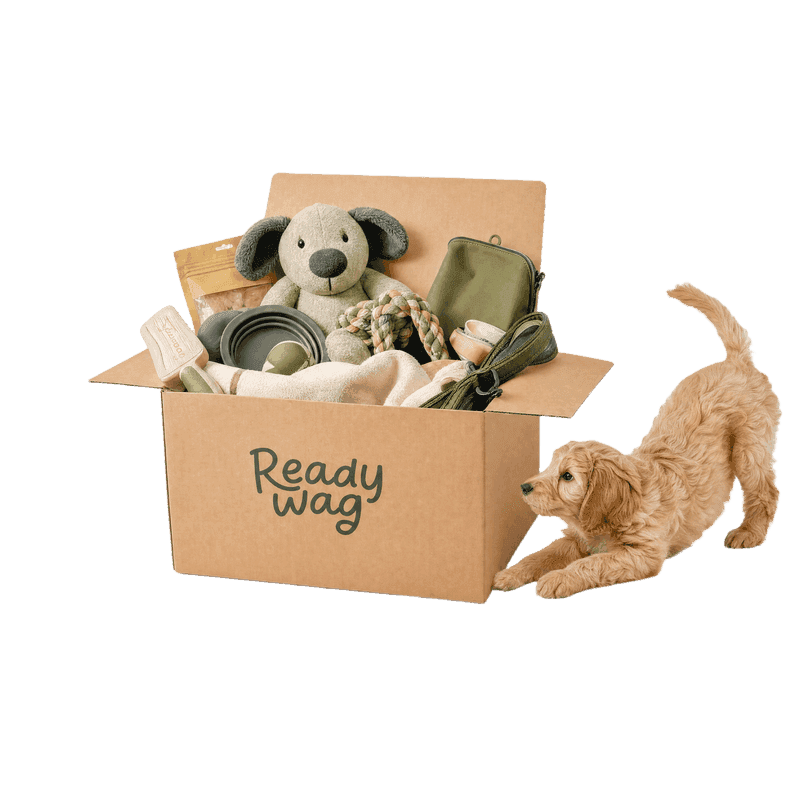
The ReadyWag Essential Kit covers everything your puppy actually needs — collar, harness, lead, bowls, toys, and more — personalised for your breed and delivered to your door.
Shop Essential Kit→