Your Puppy's First Week at Home: A Day-by-Day Survival Guide (UK 2026)
Survive and thrive during your puppy's first 7 days home. A practical, UK-focused guide with night-by-night schedules, toilet training tips, and what to expect.
By ReadyWag Team
The first week with a new puppy is magical, exhausting, and slightly chaotic — in the best way.
You've prepped the house, bought the gear, and counted down the days. Now your puppy is actually here — and nothing quite prepares you for the reality of a tiny creature who needs to pee every two hours, chew everything in sight, and cry through the night.
This is normal. Every first-time owner goes through it. The key is having a plan. Here's a day-by-day guide to surviving — and actually enjoying — your puppy's first week at home, written specifically for UK owners.
Day 1: Arrival Day — Keep It Quiet
Collect your puppy at least an hour after their last meal to reduce travel sickness. Bring a secure travel crate or carrier and a blanket with the mother's scent from the breeder — the familiar smell is enormously comforting.
When you arrive home: carry your puppy straight to the designated toilet spot in your garden BEFORE going inside. Wait quietly. If they go, praise calmly and enthusiastically. This single moment sets the tone for toilet training.
Inside, introduce just ONE room — usually the kitchen or living room, somewhere easy to clean. No visitors on day one. Your puppy has just left everything they've ever known. They need calm, not a party.
Spend the evening sitting on the floor at their level. Let them explore you at their own pace. Talk softly. Offer a chew toy. If they fall asleep on your lap, let them — they've had a big day.
First night: expect crying. Put their crate in your bedroom if possible — your scent is reassuring. Set an alarm for a toilet break halfway through the night (more on that below).
Day 2–3: Establish the Routine
Puppies thrive on routine. From day two, start building a predictable daily schedule:
First thing in the morning (6:30–7am): Carry to toilet spot. Wait. Praise when they go.
Meal times: 4 small meals daily at consistent times (e.g., 7am, 12pm, 5pm, 9pm). Water available freely but remove 1–2 hours before bed.
After each meal: Straight to the toilet spot. A full bladder triggers the need within 10–15 minutes.
Play sessions: Short and frequent. 5–10 minutes of focused play, then a nap. Overtired puppies are bitey, whiny puppies.
Nap times: Puppies need 18–20 hours of sleep per day. Enforce naps in the crate or pen. A good rule: 1 hour awake, 2 hours asleep.
During these early days, focus on three things only: toilet timing, name recognition, and bite inhibition. Everything else can wait.
Toilet Training: The Golden Rules
Most first-week accidents happen because the owner missed the signal, not because the puppy 'did something wrong'. At 8–9 weeks, a puppy physically cannot hold their bladder for more than 1–2 hours. Here are the non-negotiable rules:
- Take them out every 2 hours during the day, plus immediately after waking, eating, playing, and drinking.
- Use the same door and the same spot every time. Consistency builds the habit.
- Use a verbal cue ('go potty' or 'be clean') as they're going, then treat and praise the instant they finish.
- Never punish accidents. Your puppy doesn't understand 'wrong'. Punishment creates fear, which makes them hide to toilet — the opposite of what you want.
- Clean accidents with enzymatic cleaner. Ordinary cleaner leaves scent traces that say 'toilet here'.
- Keep a log for the first week. Note: time, whether they went, and any accidents. Patterns emerge fast.
The First Night: A Realistic Plan
The first night is the hardest. Here's what actually happens and how to handle it:
Your puppy has never slept alone. They've spent every night of their life snuggled with mum and littermates. The crate is unfamiliar and lonely. Crying is normal and expected.
Here's a three-night plan that works:
Night 1: Crate in your bedroom, right next to your bed. When they cry, lower your hand to the crate bars or talk softly. No picking up, no dramatic reassurance — just your presence. Set an alarm for 3 hours after bedtime for a toilet break.
Night 2: Same setup but extend the toilet break to 4 hours. They'll still cry but less.
Night 3: Start moving the crate towards the door. If they settle, great. If not, go back to beside the bed for a few more nights.
Most puppies are sleeping through the night (with one toilet break) by the end of week two. By week three or four, many can do 6–7 hours.
Feeding Schedule for the First Week
Stick with the breeder's food for at least two weeks. Sudden diet changes cause diarrhoea — which means more accidents and more cleaning. Smooth transitions only.
Typical schedule for an 8–12 week old puppy:
- 7:00am — Breakfast
- 12:00pm — Lunch
- 5:00pm — Dinner
- 9:00pm — Small supper (helps them sleep through)
- Remove water 1–2 hours before bed to reduce night-time accidents.
Socialisation: Start Safe, Start Smart
Until your puppy has had their second vaccination (usually 10–12 weeks) and the vet gives the all-clear (1–2 weeks after), they must not touch public ground where unvaccinated dogs may have been. This is critical.
But socialisation doesn't stop. The critical window closes around 12–16 weeks, so you need to work within vaccination limits:
Carry your puppy everywhere. Let them see traffic, bicycles, pushchairs, other dogs from a safe distance, people in hats, umbrellas opening — the world is new and overwhelming. Each positive exposure builds a confident adult dog.
Invite vaccinated, known dogs to your home for supervised play. Carry your puppy to coffee shops and sit outside. Drive to the train station and watch from the car park. The more they see safely, the better.
Common First-Week Problems and Fixes
Problem: Puppy won't eat. — Try hand-feeding or mixing kibble with a tiny bit of warm water. If they still won't eat for more than 12 hours, call your vet.
Problem: Puppy bites everything. — Completely normal. Redirect to a chew toy every time. If they keep biting you, end play and turn away. They learn that biting = no more fun.
Problem: Puppy cries all night. — Follow the crate-by-the-bed plan above. A heartbeat toy or warm water bottle (wrapped in a towel) can help. The first 2–3 nights are the worst.
Problem: Puppy hasn't pooped in 24 hours. — Common on day one (stress + travel). If it extends beyond 48 hours, call your vet.
Problem: I think I've made a mistake. — This is called the 'puppy blues' and it's incredibly common. Up to 50% of new owners experience it. The exhaustion, the responsibility, the loss of freedom — it hits hard. It passes. By week three, the bond forms and everything changes. Talk to your breeder, join a UK puppy support group, and be kind to yourself.
Final Thoughts
The first week is about survival, not perfection. If your puppy eats, sleeps, toilets (mostly in the right place), and gets lots of gentle love — you're winning. Don't compare your experience to Instagram-perfect puppy arrivals. Real first weeks involve accidents, tears, and chewed furniture.
And remember: that tiny, chaotic bundle of teeth and energy will be your best friend for the next 12–15 years. The first week is a blip. You've got this.
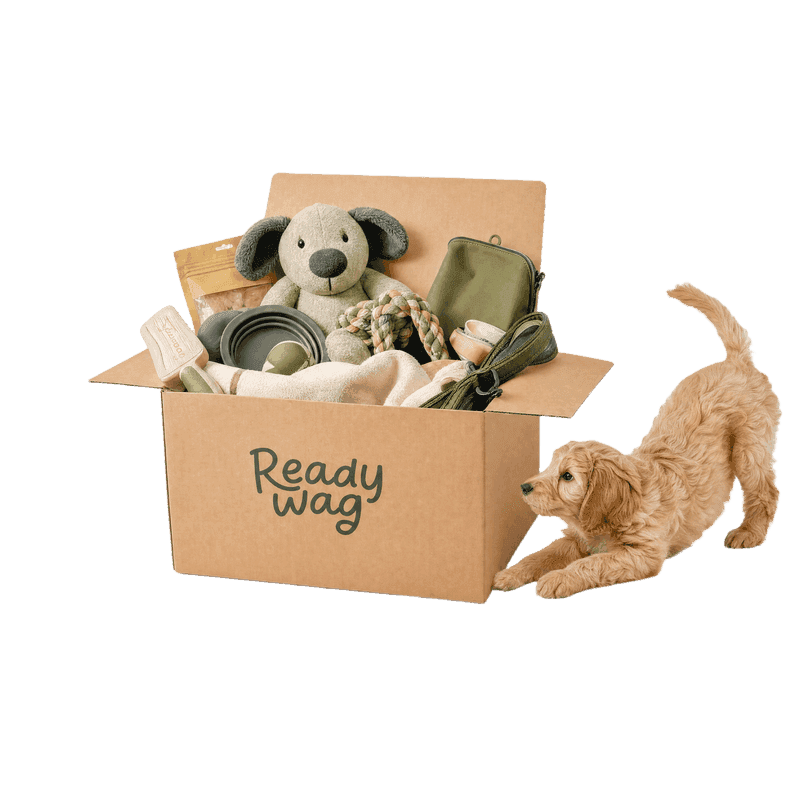
Make the first week easier with a ReadyWag Starter Kit.
Our Complete Kit includes 25 puppy essentials — from collars and leads to chew toys and comfort items — all in one box, personalised for your breed. Less shopping, more snuggling.
Explore the Complete Kit→