New Puppy Checklist UK: 25+ Essentials You Actually Need (2026 Guide)
Everything you actually need before bringing a puppy home. A no-fluff, UK-specific checklist covering legal requirements, essential gear, and what to skip.
By ReadyWag Team
Bringing a puppy home is one of life's best moments — but the shopping list? That's overwhelming.
Walk into any pet shop and you're hit with aisles of stuff. Beds, bowls, collars, crates, toys, treats, shampoos, supplements — it's enough to make your head spin. The good news? You don't need most of it. Not on day one, anyway.
After reading hundreds of Reddit threads from UK puppy owners and studying what veterinarians and trainers actually recommend, we've put together the definitive checklist. No filler, no upselling — just what you genuinely need before your pup arrives, plus a few things you can safely skip.
Before You Shop: The Legal Essentials (UK)
Before you spend a penny on accessories, there are a few non-negotiables UK law requires. By the time your puppy comes home, your breeder should have handled the microchip — it's a legal requirement by 8 weeks in England. But the ID tag with your name and address? That's on you. Under UK law, any dog in a public place must wear a collar with an ID tag showing the owner's name and address. That's not optional — and frankly, it's the most important piece of safety gear you'll buy.
Speaking of safety, you'll also need third-party liability insurance if your dog is a banned breed type — but for everyone else, standard pet insurance covers liability. More on costs later.
The Real Essentials: What You Actually Need
Let's break this down by category. These are the items UK vets, trainers, and experienced owners agree are essential from day one.
- Collar & ID Tag — UK legal requirement. Get an adjustable nylon collar in the right size for your breed. The tag must have your surname and address. This is not optional.
- Harness — A Y-front harness is recommended by trainers. It protects your puppy's neck and prevents pulling. Much safer than attaching a lead to a collar for walks.
- Lead — A lightweight standard lead for early walks. Double-ended training leads are also great for versatility during loose-lead walking practice.
- Food & Water Bowls — Stainless steel or ceramic with non-slip bases. Avoid plastic — it can harbour bacteria and cause chin acne.
- Complete Puppy Food — Buy the same brand your breeder was using. Switching food abruptly causes upset stomachs. Transition slowly over 7–10 days if you do switch.
- Crate or Playpen — A crate (sized so puppy can stand, turn, lie down) is invaluable for toilet training and giving your pup a safe space. Many UK trainers recommend starting with a puppy pen instead for more room.
- Comfortable Bed — Washable, durable, and placed inside the crate or pen. Vet-bed style mats are popular with UK trainers.
- Chew Toys — Teething starts around 12 weeks. Soft rubber toys (like puppy Kongs) and natural rope toys save your furniture. Freezing a wet flannel also works wonders for sore gums.
- Puzzle Toys — Mental stimulation is just as important as physical exercise. Treat-dispensing puzzle toys keep a smart pup occupied.
- Soft Toy — A comfort toy for those first nights away from mum and littermates. Many owners recommend one with a heartbeat simulator.
- Enzymatic Cleaner — The single most important cleaning product you'll buy. Ordinary cleaners don't break down the enzymes in urine, so your puppy will keep returning to the same spot. Bio-enzymatic cleaners do.
- Puppy Pads (or Real Grass Alternative) — Controversial among trainers. Some say pads confuse toilet training. If you use them, place them near the door and transition to outdoors quickly. Real-grass patch systems are a better alternative.
- Toothbrush & Puppy Toothpaste — Start dental care early. Finger brushes are great for getting your pup used to the sensation.
- Nail Clippers — Guarded-blade clippers designed for puppies. Get your pup used to paw handling from day one.
- Treat Pouch — Essential for training. Keep high-value treats accessible during walks and training sessions.
- Seat Belt Restraint or Travel Crate — UK law requires dogs to be secured in a car. A seat belt tether clips into the seatbelt buckle.
What You Can Skip (According to UK Trainers)
The pet industry wants you to buy everything. Experienced owners and trainers say otherwise. Here's what you genuinely don't need:
- Puppy pads (long-term) — Many trainers advise against them for full toilet training. They teach your pup it's OK to toilet indoors. Use them only as a very short-term bridge.
- Toilet training bells — Cute idea, but many puppies learn 'ring bell = attention' rather than 'ring bell = need toilet'. A simple routine works better.
- Choke chains, prong collars, e-collars — These have no place in modern puppy training. Positive reinforcement is faster, kinder, and more effective.
- Designer dog beds — Your puppy will probably prefer your old towel for the first few weeks. Save the expensive bed until they're past the chewing phase.
- Fancy costumes — Cute for Instagram, but most puppies hate them. Focus on comfort items first.
How Much Does This All Cost? (UK 2026)
Here's a realistic budget for initial puppy setup in the UK. Prices are approximate:
- Collar & ID tag: £8–£15
- Harness: £15–£30
- Lead: £8–£20
- Food & water bowls: £10–£25
- Crate: £25–£60 (depending on size)
- Bed & bedding: £15–£40
- Chew toys (3–4): £15–£30
- Puzzle toy: £10–£20
- Enzymatic cleaner: £8–£15
- Toothbrush & toothpaste: £8–£15
- Nail clippers: £8–£12
- Treat pouch: £8–£15
- Seat belt restraint: £10–£20
- Puppy food (first month): £15–£35
The Smart Way to Save
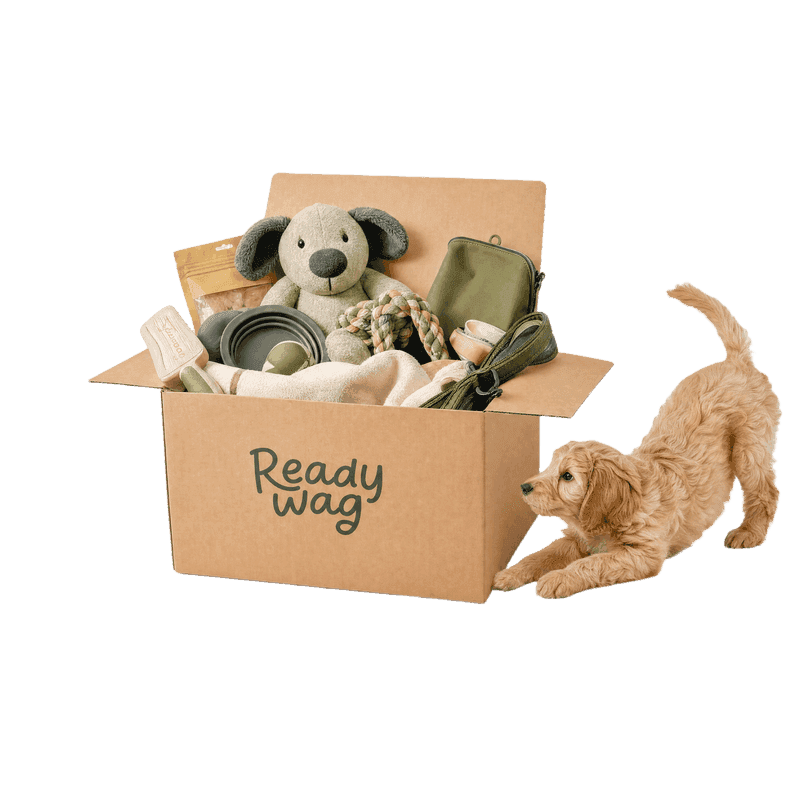
If you add all that up, you're looking at £160–£400 just for the basics — and that's before toys, a first aid kit, grooming tools, and all the extras. That's where a curated puppy starter kit makes sense. Instead of hunting down 14 different Amazon listings and hoping they all fit together, a single box with everything you need — sized correctly for your breed — saves both money and mental energy.
The ReadyWag Essential Kit covers 14 of the most important items from this checklist in one box, personalised for your pup. The Complete Kit includes 25 items including toys, grooming tools, and a travel setup — everything but the food and crate. Every item is chosen for quality, not filler, and you won't overpay for things you don't need.
The 7-Day Countdown: When to Buy What
If your puppy arrives in a week, here's your timeline:
- 7 days before: Order food (same as breeder's), crate, bed, bowls. These are the big items that need to be set up.
- 5 days before: Buy collar, ID tag, harness, lead. Get a cheap engraving service for the tag.
- 3 days before: Stock up on enzymatic cleaner, poop bags, treats. Puppy-proof your home.
- 1 day before: Set up the crate with bedding. Prepare a safe zone with pen/gates. Charge your phone for puppy photos.
- Arrival day: Collect puppy with a travel crate. Go straight to the designated toilet spot before entering the house. Keep calm and don't overwhelm them.
Final Thoughts
The best thing you can do for your new puppy is prepare — but don't let the shopping list stress you out. Stick to the essentials, skip the gimmicks, and invest in quality where it counts: collar, harness, bed, and food.
Everything else, you can figure out as you go. Your puppy doesn't need a perfectly stocked home — they need you, a safe space, and a consistent routine. The rest is just stuff.
Already got the checklist? Let us handle the shopping.
The ReadyWag Essential Kit covers 14 of the most important items from this list — sized for your breed, personalised with your pup's name, and delivered to your door. One box, no hassle.
Find Your Kit→